
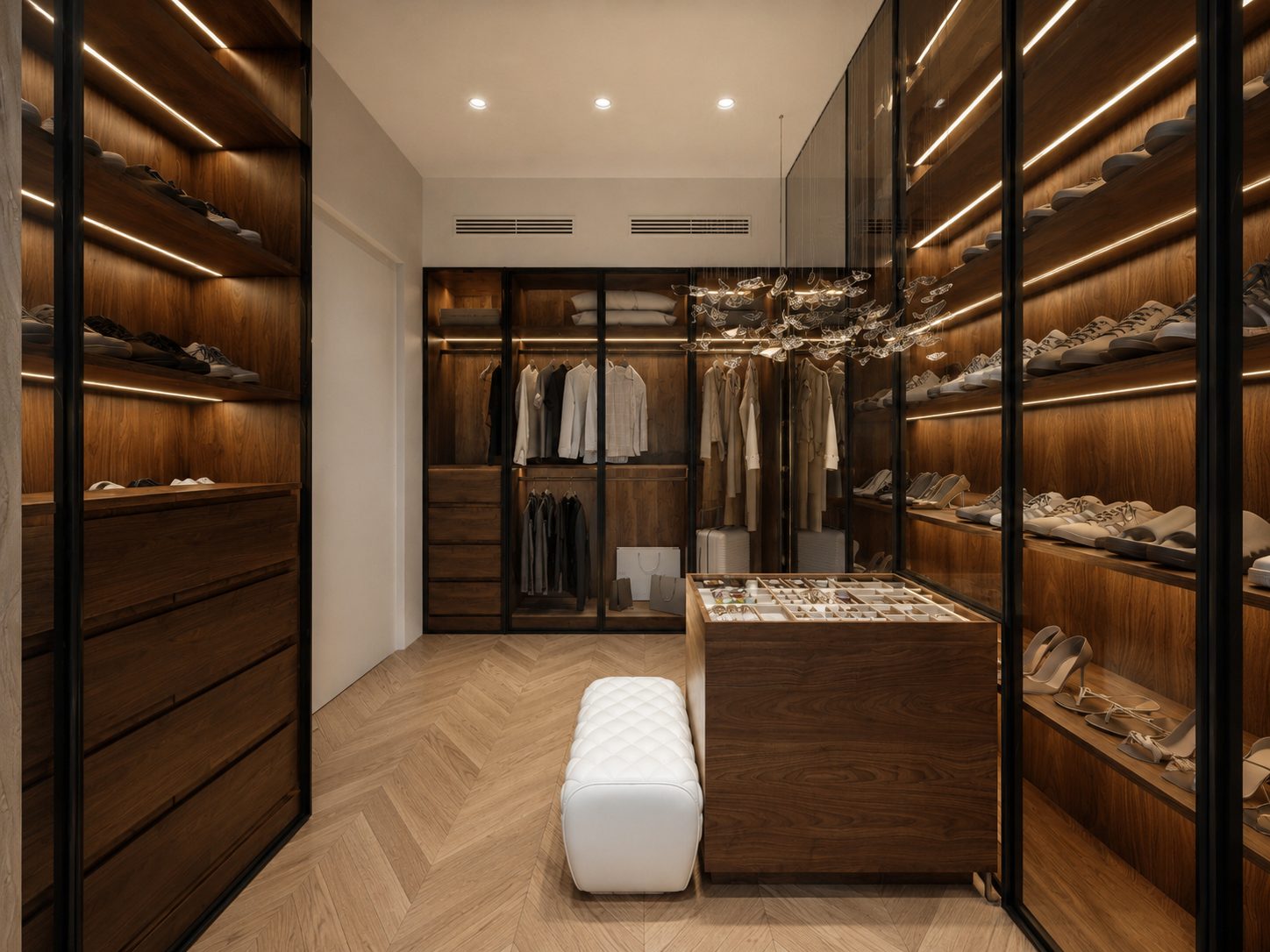
TL;DR: An interior decorator in Dubai styles and furnishes a space you already have: furniture, soft furnishings, colour, lighting, curtains and FF&E, with no walls moved and no MEP touched. Budget roughly AED 10,000–25,000 for a studio, AED 25,000–60,000 for a 2–3 bedroom apartment, and AED 80,000–250,000+ for a villa. Apartments take four to eight weeks, villas twelve to twenty. If you need to move a wall or reroute plumbing, you want a designer, not a decorator.
Decorator or designer: which one do you actually need
Most people searching for a decorator in Dubai actually need one, and a smaller group needs a designer and does not know it yet. The fastest way to tell them apart is to ask a single question: does the room need building work, or does it just need to look and feel finished?
A decorator works with the structure that is already there. Layout stays, walls stay, the kitchen and bathrooms stay where they are. What changes is everything you can see and touch: sofas, rugs, curtains, lighting, wall colour, art, accessories, and how the furniture is arranged. This is the FF&E and soft-furnishings layer, plus styling.
A designer changes the shell. Knocking two rooms together, moving a wet wall, reworking the electrical layout, adding a false ceiling, relocating the kitchen. That is structural and MEP work, and in Dubai it needs stamped drawings, a fit-out permit and DEWA sign-off before anyone lifts a hammer. A pure decoration job avoids all of that, which is exactly why it is faster and cheaper.
| | Interior decorator | Interior designer |
|---|---|---|
| Works on | Existing structure, no building work | Can change walls, MEP, layout |
| Scope | Furniture, soft furnishings, colour, lighting, FF&E, styling | Space planning, construction drawings, MEP, fit-out |
| Permits in Dubai | Usually none | Fit-out permit, NOC, DEWA sign-off |
| Typical timeline | 4–8 weeks apartment | 8–20+ weeks with works |
| Best for | Refresh, staging, styling a finished shell | Renovation, reconfiguration, new handover fit-out |
If your apartment already has a decent kitchen and bathrooms and you just want it to stop feeling like a rental, decoration is the right and cheaper answer. If you hate the layout itself, no amount of styling fixes that, and you are looking at a renovation. Where the line sits in your specific flat is something we scope against drawings, not a phone call.
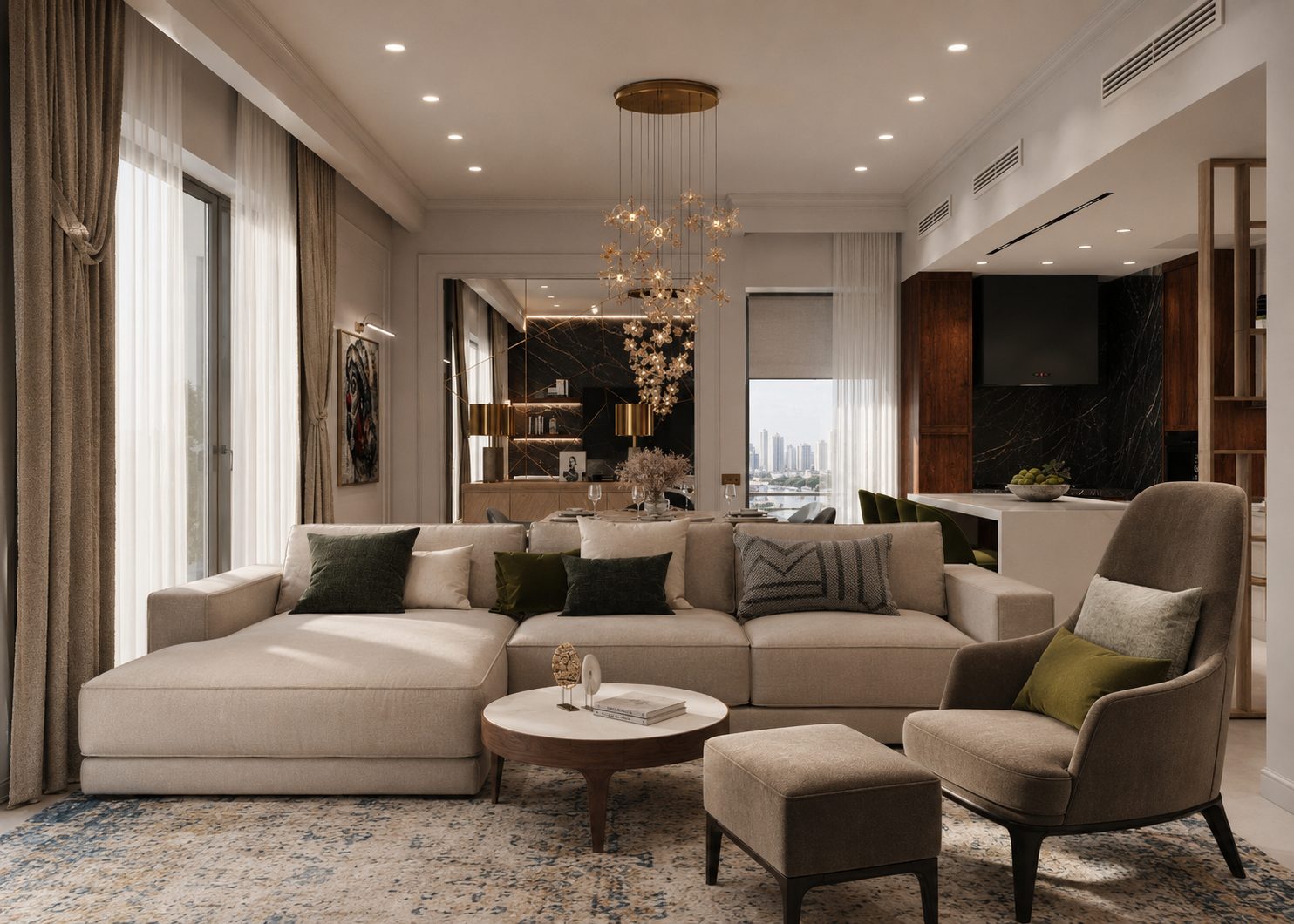
What an interior decorator in Dubai actually does
Decoration in Dubai is not "buying nice cushions". It is a defined scope that runs from a brief to a fully styled handover, and a good decorator owns every step so you are not chasing five suppliers yourself.
The work usually breaks down like this:
FF&E — furniture, fixtures and equipment — is the core: sofas, beds, dining sets, storage, loose lighting and the freestanding pieces that make a room function. On a luxury villa, FF&E alone often runs 30–40% of the decoration budget. Alongside that comes soft furnishings: curtains and blinds, rugs, upholstery, cushions, bed linen. Curtains in a Dubai villa are rarely off-the-shelf; blackout and motorised tracks add cost but earn their place against the glare.
Before anything is ordered, a decorator builds a colour and material scheme — a mood board that fixes the palette, finishes and materials so the room reads as one decision rather than ten separate purchases. Custom work fills the gaps: reupholstering existing pieces, bespoke headboards, made-to-measure seating for an awkward majlis or window bay.
The lighting layer is the fittings, not the wiring. Floor lamps, table lamps, decorative pendants and the warm-versus-cool decisions that change how a room feels after dark are all part of the scope. Then comes styling and install: placement, art hanging, accessories, and the final day where boxes turn into a finished home.
Good decorators start with a mood board and a scheme, then a shopping list you can approve line by line. That approval step matters in Dubai, because lead times on imported furniture stretch to eight or twelve weeks, and a piece ordered late holds up the whole install.
A decorator can also help with space planning in the light sense: how the furniture sits, traffic flow, whether that sectional actually fits. What they will not do is move the wall behind it. If the plan itself is broken, that is a designer's job, and pretending otherwise is how projects go sideways.
How much interior decoration costs in Dubai
Decoration prices in Dubai track the size of the space, the finish level and how much is bespoke. These are market ranges to plan around, not a fixed DOMECO price list, and the final figure depends on the pieces you choose more than on square metres.
| Space | Typical decoration budget | Timeline |
|---|---|---|
| Studio | AED 10,000–25,000 | 4–6 weeks |
| 2–3 bedroom apartment | AED 25,000–60,000 | 4–8 weeks |
| Villa | AED 80,000–250,000+ | 12–20 weeks |
The biggest swing is furniture. Two apartments of the same size can sit at either end of that range depending on whether the sofa is AED 6,000 or AED 40,000. FF&E is where a luxury villa budget concentrates, often 30–40% of the total, with soft furnishings and lighting taking most of the rest.
Consultation is usually the cheap part. Many Dubai decorators offer a first consultation free or up to around AED 2,000, and some credit that fee against the project if you go ahead. Ask which model you are getting before you book, because a "free" consultation that ends in a vague number is worth less than a paid one that gives you a real scope.
Buying blind is where budgets quietly inflate. Owners who source furniture piecemeal usually overspend and end up with rooms that do not sit together, then pay a decorator to fix it. Getting the scheme right first is cheaper than correcting it later. If you want a rough figure for your own place, the quick cost estimate gets you there in a few questions.

Decoration by property type: apartment, villa, office
Scope, budget and timeline all shift with the type of space, and the district shapes what is realistic. A Marina apartment, an Emirates Hills villa and a DIFC office are three different jobs.
Apartments (Dubai Marina, Downtown, Business Bay, JLT). The common brief is a handover flat or a tired rental that needs to feel like a home. Scope is furniture, curtains, lighting, art and styling across four to eight weeks. Building rules still apply even for pure decoration: many towers restrict move-in and delivery to booked service-lift slots and specific hours, and a large furniture delivery without a booked slot gets turned away at the loading bay.
Villas (Palm Jumeirah, Emirates Hills, The Meadows). Larger footprint, more rooms, and far more custom work: window treatments across double-height glazing, outdoor and majlis furniture, and FF&E that can run into six figures. Twelve to twenty weeks is normal once you factor lead times on imported pieces. On the Palm and in waterfront villas, humidity and salt air matter for material choice, which is a real factor, not a sales line.
Offices (DIFC, Downtown, Business Bay). Commercial decoration leans on brand, durability and the impression the reception makes. Even where you are only furnishing and styling, some communities and free zones want the layout signed off, and DCD requirements apply once you touch anything fire-related. We have decorated and fitted commercial spaces from City Walk to a Dubai Hills Mall boutique, and the honest note is that offices rarely stay pure decoration once you look closely at power and partitions.
Where your project sits on that spectrum is easiest to judge against real examples. Ours are in the portfolio, from Palm Jumeirah homes to retail in the mall.
Climate: what actually survives a Dubai summer
Material choice in Dubai is not a style question, it is a durability one. A scheme that looks perfect in a showroom fails fast if it ignores the heat, the humidity and the light coming through the glass.
Direct sun through floor-to-ceiling glazing fades fabric and timber within a season on the wrong side of the building. Deep dyes, solution-dyed outdoor fabrics and UV-stable finishes hold up; cheap prints do not. Blackout and solar-control window treatments earn their cost twice, on comfort and on protecting everything behind them.
Humidity is the second factor, worst on the Palm and in waterfront villas. Solid untreated timber can swell and warp, natural fibres hold damp, and untreated metals corrode near the coast. Engineered timber, treated hardwoods, powder-coated and marine-grade metals, and performance fabrics are the safer specification. For outdoor and majlis furniture, treat anything within reach of salt air as coastal-grade or expect to replace it.
In Dubai you decorate for the light and the humidity first, then for the look. A decorator who has worked here specifies that way by habit.
Trends worth following in 2025–2026
Trends are worth reading as direction, not instruction. Dubai's decoration taste in 2025 and into 2026 has moved away from cold, glossy showroom looks toward warmth, texture and pieces that feel personal.
What is showing up on real briefs: warm neutrals and earthy tones over stark white and grey; natural and tactile materials such as travertine, brushed timber, boucle and rattan; curved and softer furniture forms instead of hard rectangles; statement and sculptural lighting used as the room's centrepiece; and biophilic touches, real greenery and natural light treated as part of the scheme. Quiet luxury has largely replaced logo-led maximalism, and layered, collected interiors are winning over the matched-set showroom look.
Majlis and outdoor living remain central to how villas are decorated here, which is a Dubai constant rather than a passing trend. The useful filter is simple: pick the pieces you will still like in five years and let the accessories carry the trend, because cushions are cheap to swap and a sofa is not.
How to choose an interior decorator in Dubai
The decorator market in Dubai is crowded, and directory listings tell you almost nothing about who will actually turn up. A short, blunt checklist separates the operators from the Instagram accounts.
- Ask for a real portfolio of finished, occupied homes, not renders. Renders sell; installed rooms prove they can deliver.
- Check they have their own team, not a rotating cast of one-off subcontractors. Continuity is what gets your install finished on time.
- Get the scope in writing: FF&E list, soft-furnishings schedule, lead times, and what is fixed versus what is an allowance. A vague number is a deposit on future add-ons.
- Confirm the fee model. Flat fee, percentage of budget, or markup on procurement. All are legitimate; not telling you which one is not.
- Ask about lead times and install date up front. Imported furniture runs eight to twelve weeks, and a decorator who glosses over that is planning to explain delays later.
- Licensing. A company delivering decoration and fit-out in Dubai should hold a valid trade licence for interior work. Ask to see it. A freelancer styling loose furniture operates differently from a licensed contractor, and once any works are involved, the licence and community approvals matter.
We lock the estimate in the contract with no top-ups after start, and we carry a penalty for every day past the agreed deadline. How we fix scope, price and timeline before work begins is set out in our services.
FAQ
What is the difference between an interior decorator and an interior designer in Dubai?
A decorator works with the existing structure: furniture, colour, soft furnishings, lighting and styling, with no building work. A designer can change the shell, moving walls, reworking MEP and altering the layout, which in Dubai needs a fit-out permit and DEWA sign-off. If nothing structural changes, you want a decorator.
How much does it cost to decorate an apartment or villa in Dubai?
As a market guide, a studio runs roughly AED 10,000–25,000, a 2–3 bedroom apartment AED 25,000–60,000, and a villa AED 80,000–250,000 or more. Furniture drives most of the swing, and on a luxury villa FF&E alone is often 30–40% of the budget. Final figures depend on the pieces you choose.
What services does an interior decorator include?
Typically FF&E sourcing, soft furnishings (curtains, rugs, upholstery, cushions), colour and material scheme via a mood board, custom upholstery, a decorative lighting layer, and the final styling and install. A decorator can advise on furniture layout, but not move walls or handle construction.
How long does interior decoration take in Dubai?
An apartment usually takes four to eight weeks, a villa twelve to twenty. The main variable is furniture lead time, since imported pieces commonly run eight to twelve weeks. Booking the scheme and ordering early is what keeps the install date honest.
Does a decorator in Dubai need a licence?
A company delivering decoration and fit-out should hold a valid trade licence for interior work, and any works inside a building bring community approvals into play. A freelancer styling loose furniture operates differently, but once fit-out or wet works are involved, a licensed contractor and the right permits are not optional. Ask to see the licence before you sign.
Can a decorator help with space planning?
Yes, in the light sense: furniture layout, traffic flow, and making sure pieces fit the room. What a decorator does not do is move walls or change the built layout. If the floor plan itself is the problem, that is a designer's job and a different scope.
What materials hold up best in Dubai's climate?
UV-stable and solution-dyed fabrics, engineered or treated timber, powder-coated and marine-grade metals, and performance textiles. Direct sun fades cheap fabric and untreated wood within a season, and humidity on the coast warps solid timber and corrodes untreated metal. Decorate for the light and the damp first, then for the look.
Do I need decoration only, or a full fit-out?
Decoration only if the shell works and you just need it furnished and styled. A full fit-out if you are changing the layout, kitchens, bathrooms or the electrical setup, which crosses into permits, DEWA and structural work. If you are unsure, get a scope against your actual drawings rather than guessing from a floor plan.
Written by the DOMECO team, based on renovation and fit-out projects across Dubai including Palm Jumeirah, Emirates Hills, Business Bay and Dubai Hills. WhatsApp +971 54 307 4888 or info@domeco.ae.