
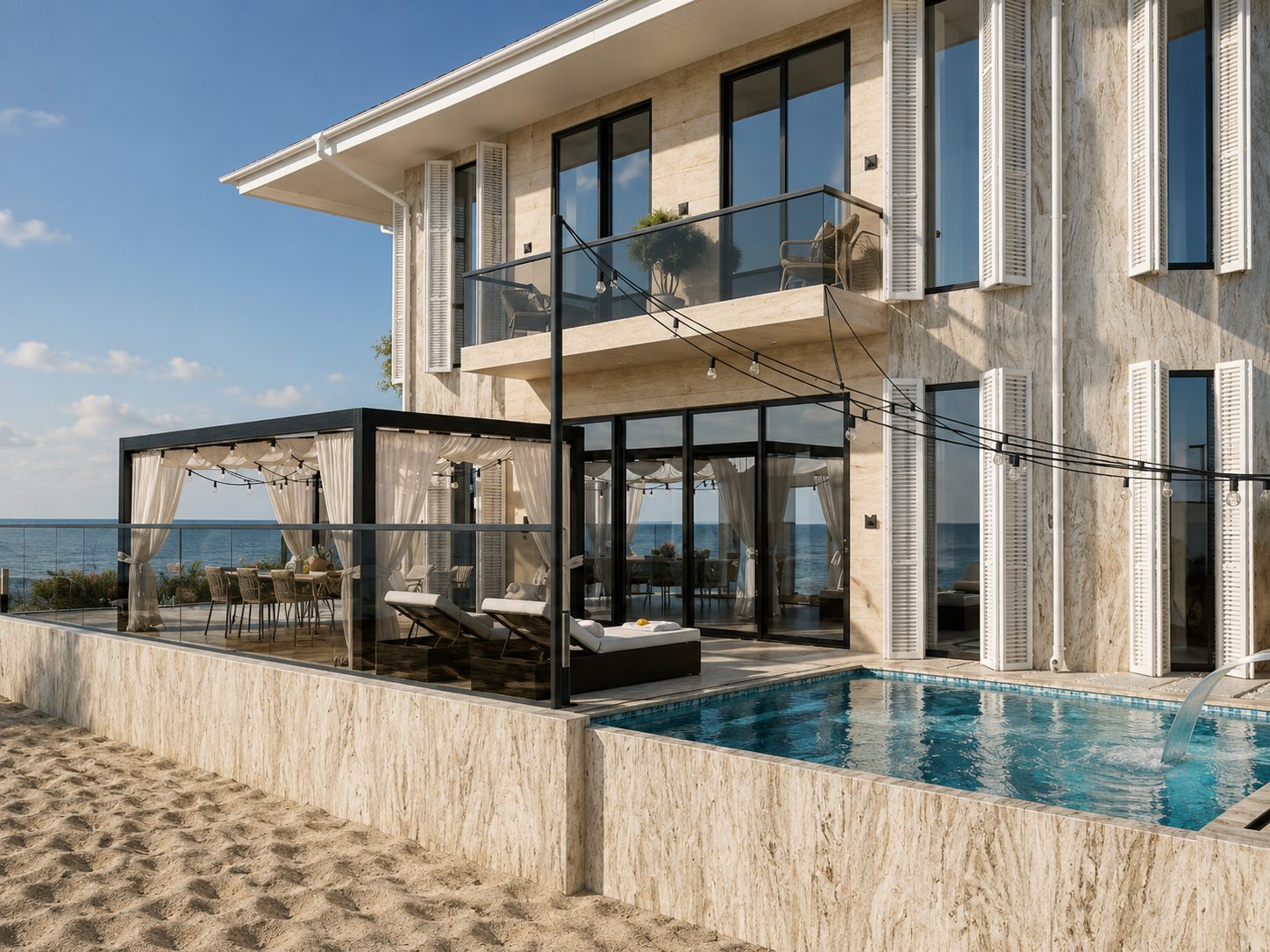
TL;DR: The designer owns intent: layouts, finish and lighting schedules, joinery concepts and a stamped drawing set. The contractor owns delivery: MEP coordination, shop drawings, permits, procurement and site work. Most villa projects in Dubai lose time at the seam between the two, not inside either scope. Write the handover between them into both contracts before demolition starts.
What a villa interior design package actually contains
A design package is a sequence of drawing sets, each one harder to change than the last. On a Dubai villa it usually runs like this:
- Concept. Spatial planning, one or two directions per room, indicative materials, mood references. Changes here cost you an email.
- Schematic design. Layouts fixed, reflected ceiling plan drafted, wall elevations for the main rooms, first pass at lighting positions. Changes here cost you a week.
- Detailed design and 100% construction documentation. Dimensioned floor plans with setting-out, RCP with ceiling levels and cornice details, elevations for every wet area, tiling layouts with a stated start point, door and ironmongery schedule, finish and material schedule with product codes and named suppliers, lighting layout with switching and circuit intent, joinery concept elevations, FF&E schedule.
That last set is what a contractor prices against. If the finish schedule says "large-format porcelain, warm grey" instead of a manufacturer, series, size, finish and grout colour, you will get a low number in the tender and a variation order in month three.
Fees split two ways in Dubai. A standalone design project starts around AED 10,000 and takes three to six weeks for an apartment; a three-to-five-bedroom villa with landscape and joinery detailing typically lands at AED 80,000 to 250,000 and up. Consultants working on a percentage typically sit at 10 to 20% of project cost.
Where the design package stops is the part nobody explains at the pitch meeting. It does not include MEP execution drawings, structural calculations, the contractor's shop drawings, the authority submission file, or site supervision unless you signed a separate supervision agreement. It also does not include a licensed engineering stamp if your designer is a decoration company rather than a registered consultant. Dubai Municipality accepts submissions from consultants registered under its engineering qualification system, so ask who is stamping before you ask what it costs.
Honest version: plenty of villa owners pay for a "full design package" and receive twelve renders, a moodboard and a furniture list. Ask for the drawing register by phase, with sheet numbers, before you sign. A designer who cannot produce that list has not built the package yet.
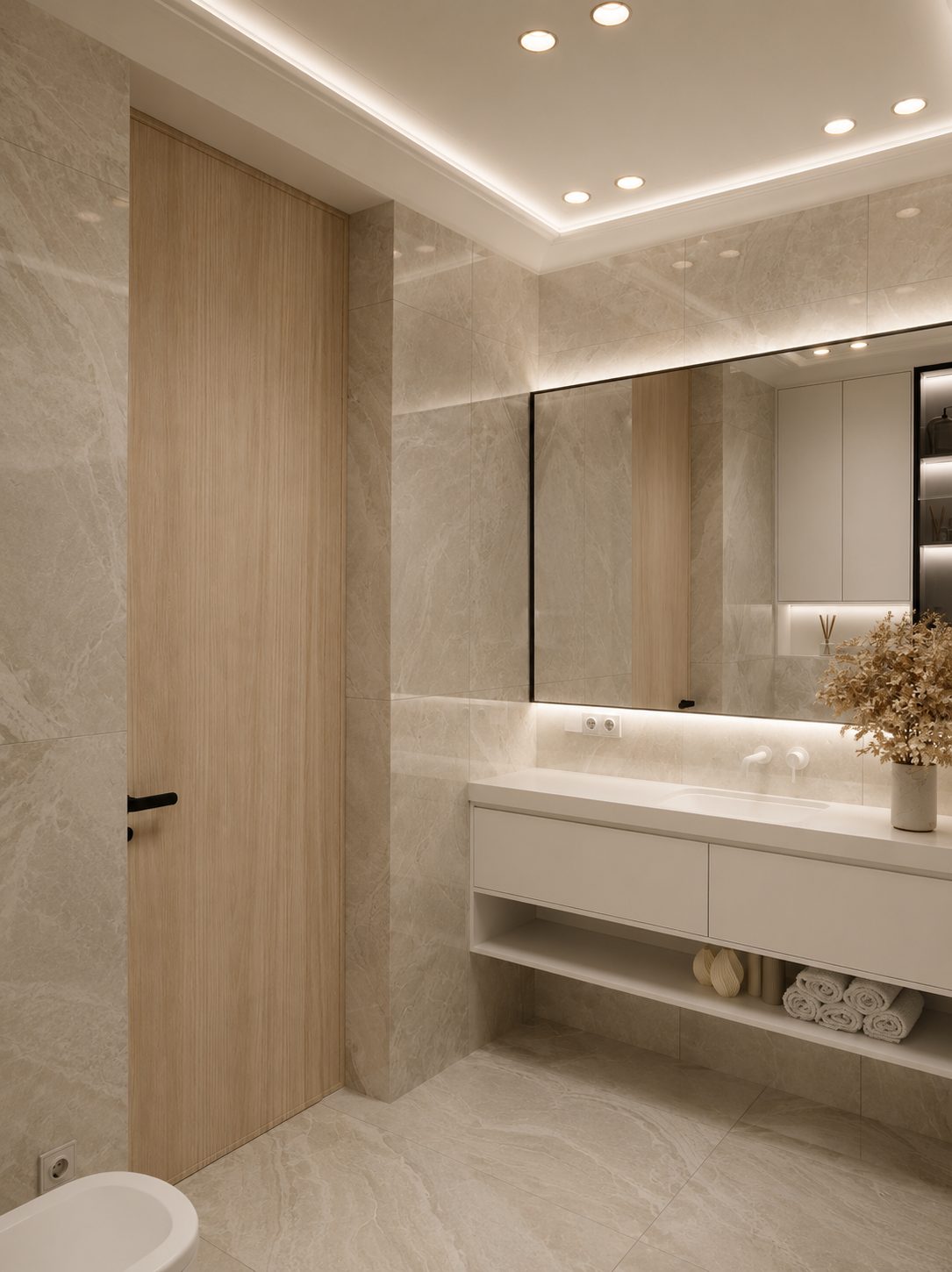
What the contractor picks up
The contractor turns intent into something buildable, and most of that work is invisible to the owner.
- Take-off and BOQ. Every line of the finish schedule converted into quantities, waste allowance and a price. This is where a vague schedule turns into provisional sums.
- MEP coordination. Ducting, chilled water routes, drainage falls, cable trays and lighting circuits drawn as one composite layout against the ceiling design. MEP typically absorbs 15 to 25% of villa renovation cost, and it is the discipline that most often forces a design change.
- Shop drawings. Joinery at 1:20 and 1:10 with carcass build-up, hardware selection, tolerances and site dimensions taken after first fix. A kitchen or wardrobe run only becomes real at this stage, and joinery pricing swings widely by construction, from roughly AED 2,500 to 12,000 per linear metre depending on carcass, front and hardware. We cover that range in detail in our guide to custom joinery and wardrobes.
- Approvals and inspections. Permit file assembly, community NOC, DEWA applications, Civil Defence where systems require it, and attending inspections.
- Procurement and logistics. Imported stone, sanitaryware and specialist lighting run six to twelve weeks lead time into the UAE, longer if the factory shuts for August. Orders placed before design freeze are how owners end up storing the wrong marble in a container.
- Execution, snagging and warranty. Site work, quality control, handover snag list and the twelve-month defects liability period.
Two of these deserve a flag. Shop drawings are the contractor's document but they carry the designer's intent, so somebody has to approve them and somebody has to answer within a fixed number of days. And the MEP coordination drawing is the single most useful thing to demand early on a villa, because it is the drawing that tells you whether the 200 mm cove detail survives the duct above it.
The seams where villa projects lose money and weeks
Design drift is the expensive one. A change made after the permit is issued reaches past the drawing itself: it changes the submission, the procurement order and often the ceiling above the change. On villa work in Dubai, variation orders commonly land between 5 and 15% of the contract value, and the majority of them trace back to a decision the owner made after the drawings were signed. The fix is a written design freeze date that both contracts reference.
The second seam is the ceiling. Recessed coves, shadow gaps and flush linear diffusers all compete with FCUs and ducts for the same 300 to 450 mm of void. When the designer draws the detail and the contractor discovers the clash on site, you get a lowered ceiling nobody agreed to. Resolve it on a composite drawing during coordination, before ceiling framing starts.
Material warranty is the third, and it catches owners who buy direct. If the designer specifies a stone slab, the owner pays the supplier and the contractor only installs it, then the contractor warrants installation and nothing else. Cracked slab, wrong batch, late delivery: none of that sits with the builder. Write supply responsibility against each line of the finish schedule, not as one clause at the back of the contract.
The fourth is quieter. Drawings that omit a setting-out point get set out by whoever arrives first at 7 am, and the tile grid lands off-centre against the feature wall. Nobody bills for that mistake. You just live with it for ten years.
Summer adds a hard constraint on top. The midday break runs 12:30 to 15:00 from 15 June to 15 September, and most gated communities layer their own working hours and delivery windows on top. A programme drawn without those windows is optimistic by weeks, not days.
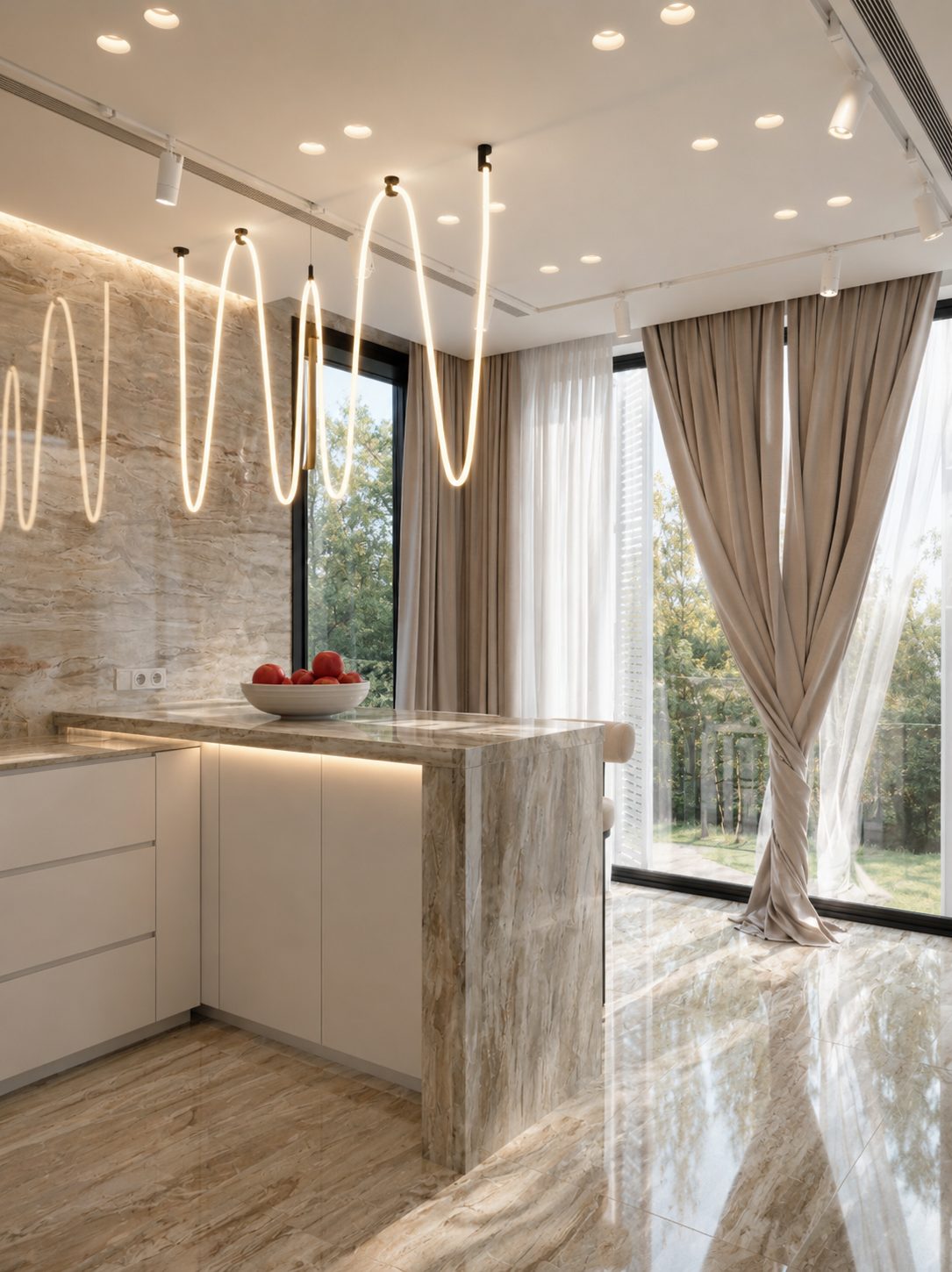
Design-only or turnkey: what changes is who carries the risk
Under two separate contracts, you hold the interface. If the drawings do not work, the designer says the contractor built it wrong and the contractor says the drawings were unbuildable, and both are partly right. You arbitrate, and you pay for the delay either way.
Under a single turnkey contract, one company signs for drawings and delivery, so the interface argument happens inside their office instead of on your site. The trade-off is real and worth naming: a contractor who also designs has an incentive to specify what they buy well. The countermeasure is a finish schedule with named products and named suppliers agreed before you sign, plus a fixed contract sum rather than an estimate.
Separate contracts genuinely win in two cases. You already have a designer whose work you trust and want on your villa, or you have a project manager on your side who runs the RFI log and the change control for you. If neither is true, splitting the contracts usually looks cheaper on paper and costs more in weeks.
Money comparison belongs in its own place, so we keep it there: rates by villa size, the split between structure, MEP and finishes, and where budgets actually overrun are set out in our villa renovation cost guide. As a rough orientation, cosmetic work starts around AED 1,500 per m², structural renovation around AED 3,000 per m², and full turnkey with furniture, appliances and decor sits between AED 8,500 and 16,000 per m². Design fees sit outside those numbers unless the contract says otherwise.
Approvals: who submits, and in what order
The authority depends on where the villa sits, not on what you are doing to it. Dubai Municipality covers most freehold and mainland communities. Trakhees, under Ports, Customs and Free Zone Corporation, covers Palm Jumeirah, Jebel Ali and the Nakheel-developed waterfront. DDA covers d3 and parts of Business Bay. DMCC covers JLT. Getting this wrong costs you the first submission cycle.
Community management sits before the authority, and the order is not negotiable. Emaar communities such as The Meadows, Arabian Ranches and Dubai Hills typically issue an NOC in five to ten working days against a fee of AED 500 to 3,000 and a refundable deposit around AED 10,000. Nakheel takes seven to fifteen working days at AED 2,000 to 5,000 with a deposit of AED 5,000 to 20,000. On Palm Jumeirah, Trakhees expects the Nakheel NOC in hand before it opens the file, so submitting them in parallel gets the package returned.
The split of duties is clean if you write it down. The designer produces and stamps the drawings and answers technical queries from the authority. The contractor assembles and submits the file, pays the fees, books inspections, handles DEWA and attends Civil Defence sign-off. On a villa, budget AED 8,000 to 30,000 across NOCs, permits and DEWA, and six to ten weeks for the full cycle before demolition can legally start. The mechanics of each authority are broken down in our guide to renovation permits in Dubai.
Plan the calendar honestly. Our Dubai Hills villa at 290 m² ran eight months door to door. The Palm Jumeirah villa at 375 m² ran thirteen. Approvals accounted for a meaningful share of that gap, on top of the extra floor area.
How to run the seam when you hire separately
If you keep two contracts, you become the project's coordination layer. That is workable with a short set of habits.
- 1. Joint kick-off before demolition. Designer, contractor and owner in one room with the drawing register on the table. Every sheet gets a status: issued for construction, pending, or not started.
- 2. A design freeze date written into both contracts. After that date, changes go through change control and get priced before work begins.
- 3. One weekly meeting, same day, forty-five minutes. Written minutes with actions, owners and dates. Verbal instructions on site do not count and should not be accepted by either party.
- 4. A numbered RFI log with a response deadline. Three working days is a fair standard for the designer to answer a site query. Without a deadline, an RFI sits for two weeks and the trade moves on to something else.
- 5. A shop drawing approval loop with the same clock. Joinery and MEP shop drawings returned late are the most common cause of quiet, unclaimed delay.
- 6. An owner decision list mapped to procurement lead times. If the stone needs ordering in week four, the decision date is week three, not week six.
None of this requires software. A shared spreadsheet and disciplined minutes cover it. What it requires is somebody who actually maintains the log, and on a separate-contract villa that person is usually you.
We work as a single contract with our own site crew, joinery produced through vetted partner workshops, a fixed contract sum with no post-start additions, a twelve-month warranty and a penalty on our side for every day of overrun. Whether that model suits your villa depends on whether you already have a designer you want to keep. If you do, keep them and manage the seam properly. If you do not, one contract removes the argument entirely. Our completed villa and apartment projects, with areas and durations, are listed on the projects page, and you can send a floor plan through contacts for a scope review.
FAQ
Who is responsible if the drawings do not work on site?
The designer is responsible for the design being buildable in principle, and the contractor is responsible for flagging a clash before executing it. In practice, liability follows whoever failed to raise the issue in writing. This is why the RFI log matters: an unanswered RFI moves the delay onto the designer, and an unraised clash moves it onto the contractor.
Can a contractor refuse to build something impractical?
Yes, and a competent one will. A contractor who installs a detail they know will fail, without written notice, inherits the problem during the twelve-month defects liability period. Expect a formal technical query, an alternative detail and a request for the designer's written approval before work continues.
Who communicates with Dubai Municipality and the community management?
The contractor submits the permit file, pays the fees and attends inspections, since the licence and insurance behind the submission are theirs. The designer supplies and stamps the drawings and responds to technical comments. The owner signs the NOC application and pays the community deposit, because the property is in their name.
What happens when the designer and contractor disagree about a material?
Go back to the finish schedule. If the product is named with a code and supplier, the argument is about price or lead time and is resolved with a written alternative and a signed approval. If the schedule says "similar or equivalent", you have a gap in the documents, and that gap is exactly where a substitution nobody wants gets installed.
Is hiring a designer and a contractor separately cheaper?
On paper, often yes, because the coordination work does not appear as a line item. In practice it shifts onto the owner as meetings, decisions and delay risk, and separate-contract villa projects tend to run more variations. It works well if you have a project manager or genuine site experience, and poorly if the villa is your first renovation.
What documents should the contractor have before starting work?
The 100% construction drawing set with a drawing register, the finish and material schedule with named products, the lighting and switching layout, the approved permit and community NOC, and a signed contract with the payment schedule, retention percentage and design freeze date. Anything missing from that list gets filled in on site by someone guessing.